
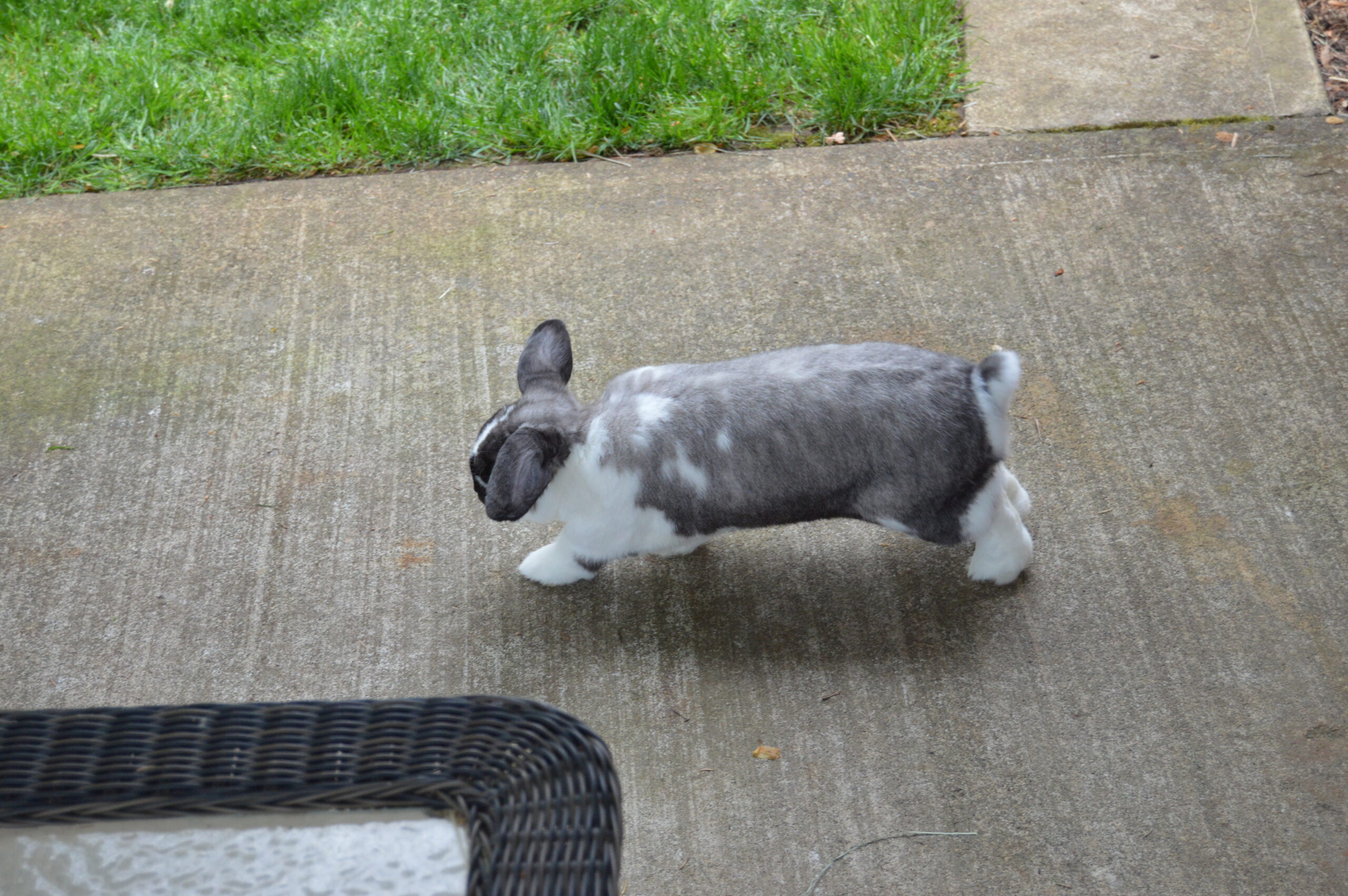
Rabbits require ample space to run, stretch fully upright, hop and run freely, and engage in natural behaviors. Obviously, they can’t do that in a cage. A small cage with food and water is not sufficient for a healthy rabbit. Because we keep rabbits in captivity, we are responsible for providing daily exercise and plenty of living space. They need space in primary enclosures, and they need LOTS of space during exercise and playtime (which should be several times each day).
Ideally, the rabbit’s primary living space should have enough space for them to run and play day and night. The space need is one reason why experienced rabbit owners, especially those who have worked with rabbits rescued from harsh beginnings, teach that rabbits are not the right pet choice for many people. If you do not have enough space, consider a different pet for your family.
Housing needs vary by breed and adult size. Some rabbits weigh only a few pounds, while others exceed 20 pounds. Planning ahead for your rabbit’s full adult size is essential when selecting enclosures, pens, or room setups. If outdoor primary living space is your choice, remember, safety and security are top priorities.
Historically-used outdoor cages and most commercial “rabbit houses” are much too small for rabbit enclosures. They also repeatedly expose the rabbits to noise that can terrify them in an environment where they cannot get away from it. These too-small environments are referred to as overcaging. Overcaging leads to physical and behavioral problems, including muscle loss, obesity, boredom, and frustration. Housing should always prioritize space and movement. Rabbits should not be restricted or strictly confined. It disrespects their base nature and needs. It is unkind.
It might seem like a lot of work to properly maintain a rabbit’s spacious living environment (and it is). However, when we bring a rabbit into our care, we also make a silent agreement to the many chores to ensure health, happiness and security.