
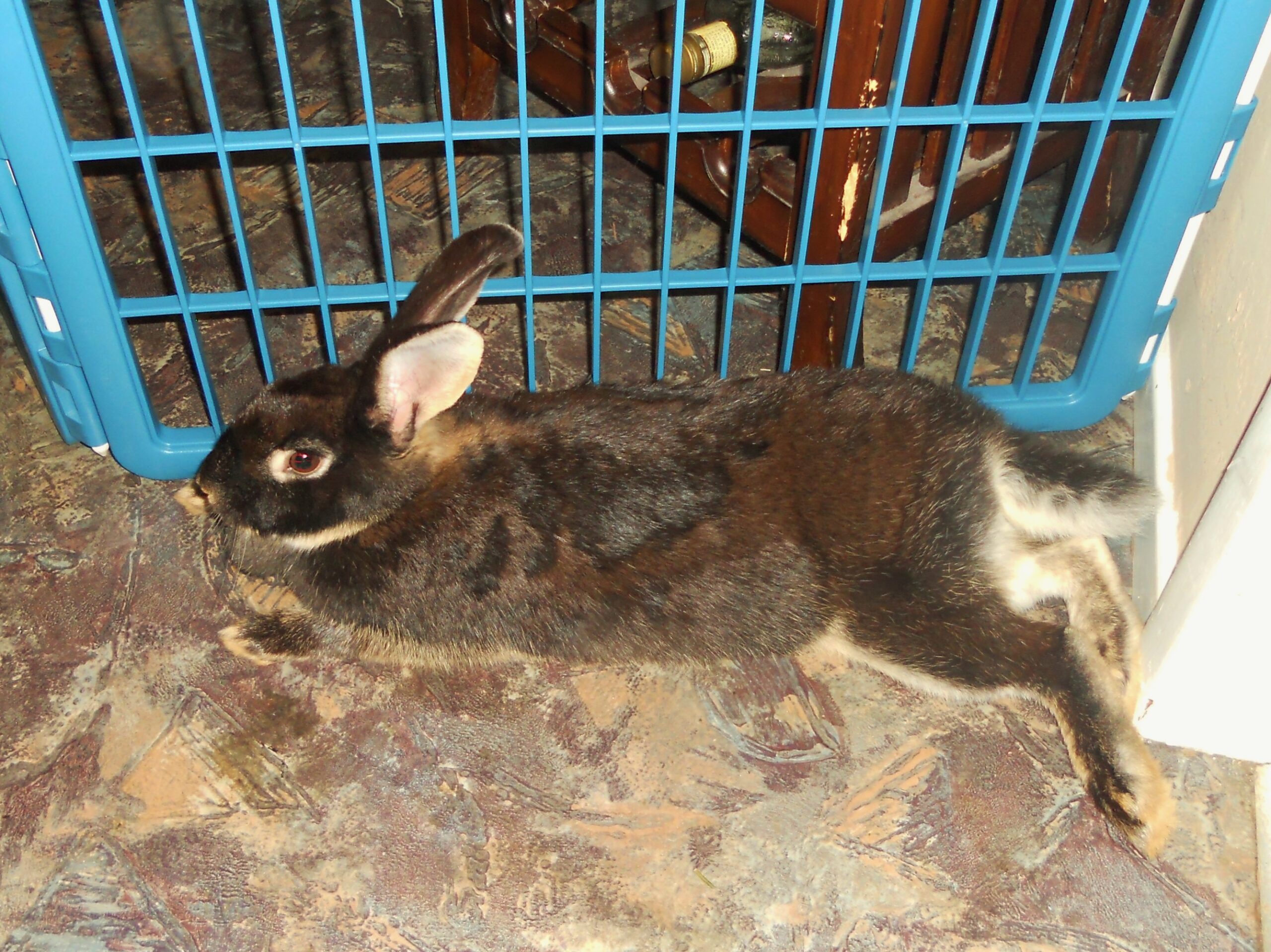
The first few days, or even a week, should be focused on observing your rabbit and establishing consistent, predictable routines.
Since rabbits are prey animals, they instinctively hide signs of weakness or illness. Carefully monitor:
- Appetite and interest in food
- Water intake
- Stool production and consistency
- Energy level and posture
- Signs of discharge from eyes or nose
- Labored breathing or lethargy
Don’t rush into major dietary changes, bonding attempts with rabbits or other animals, or extensive handling during this observation period. Your rabbit needs time to decompress and adjust.
Remember, his present situation is stress. That stress only escalates with sudden changes or what the rabbit perceives as environmental chaos. Your home might be perfectly calm to you, but a highly sensitive animal perceives it much differently. Everything in the normal-for-you environment is new and out of place for him.
Bonding begins with presence, not touch. Remember to just sit quietly on the floor and allow the rabbit to approach you rather than approaching him quickly, lifting him from the ground or forcing any interactions this early on. A quiet, patient approach to interactions will build trust more effectively than lifting, holding, restraining or forcing him.
Never chase a rabbit. Do not allow others to chase him, either. Chasing activates prey instincts. Any trust the rabbit was building will come undone very quickly.