
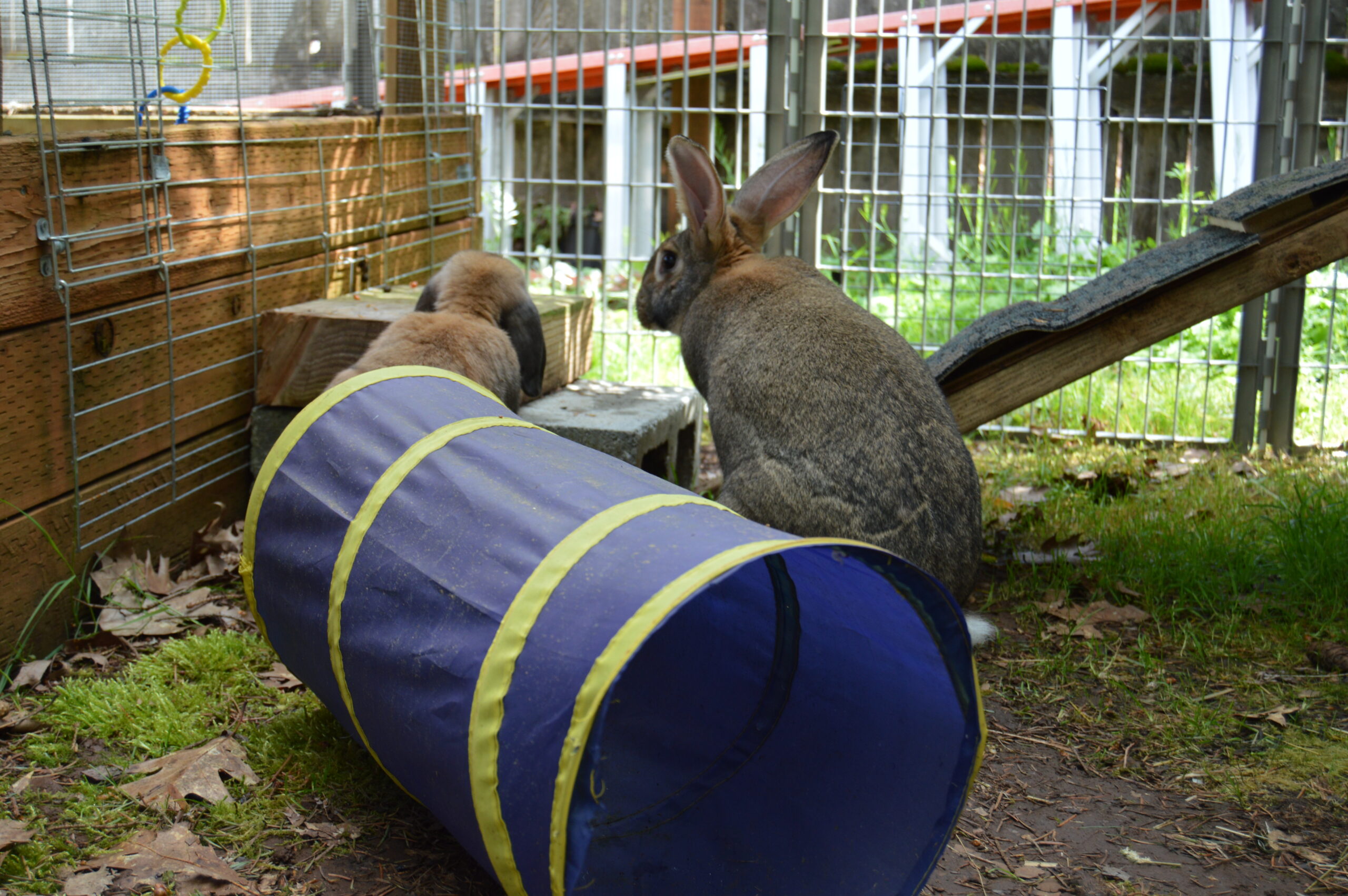
Your new rabbit should begin in a smaller, secure primary area rather than having free access to the entire home.
A defined space helps reduce anxiety and supports litter habits. It should include:
- Solid, supportive NON-SLIPPERY flooring (rabbits do not have pads on the bottoms of their paws like other animals. Slippery floors are very difficult for them to navigate and they can be harmed if they are not used to walking on those surfaces)
- Unlimited hay & fresh water
- A litter box
- A dark hiding place or tunnel (rabbits need an entrance and an exit)
Hiding is not avoidance. It’s natural rabbit behavior. Retreat spaces are a basic need, not an optional comfort item. A rabbit new to your home will utilize retreat spaces even more frequently until they feel safe. Even then, rabbits retreat frequently where they take a lot of naps each day.
Keep the rabbit’s area calm, free of noise and excess foot traffic. They need a quiet place, especially when they are new in your home. Avoid loud televisions, barking dogs, or excited children rushing toward the enclosure. Again, rabbits can literally be frightened to death.
When cleaning or refreshing food, move slowly and deliberately. You want to show the rabbit that you are not a threat. Rabbits rely heavily on smell and hearing. In time, your rabbit will begin cautiously investigating you.
Allow the process of the rabbit’s investigation to unfold without forcing interaction. Building relationships requires respect for the rabbit’s base nature. since rabbit’s are prey animals, their nature includes doing things on their terms and in their own time. Some rabbits need more time than others.
Best Practice: Watch your new rabbit’s behavior and how he responds to you being close. If you want to interact, sit quietly in the rabbit’s space and just wait for him to approach you. This helps build trust. Remember… interactions, especially early on, need to be on the rabbit’s terms. He is the one that needs to build trust and become more comfortable in his new environment.
If you plan to expand the rabbit’s space, do so gradually over several weeks. Sudden large spaces can increase anxiety and disrupt litter habits, especially in young or unaltered rabbits.