
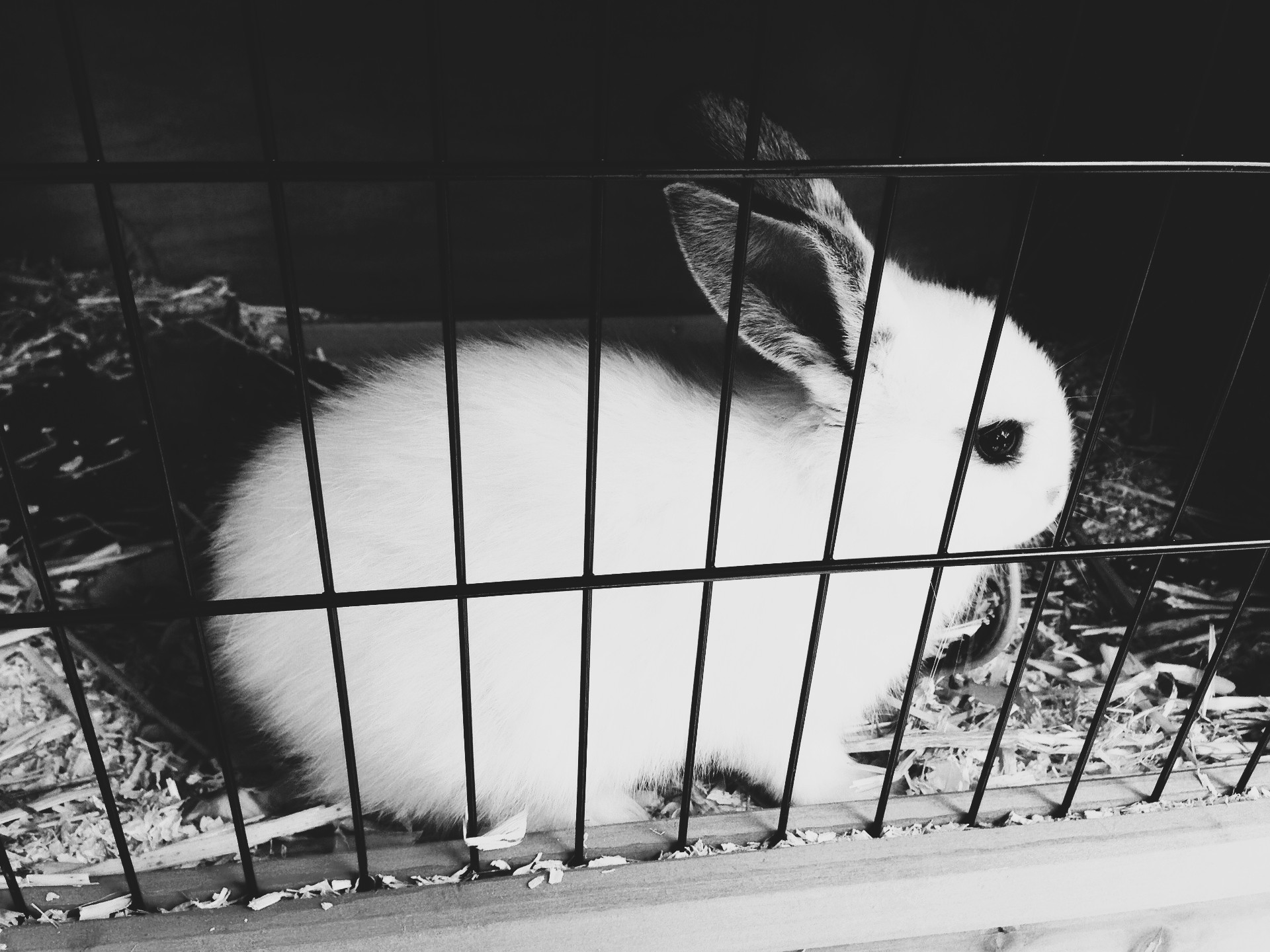
Let’s talk a little more about rabbits and space. One of the most common mistakes is housing a rabbit in an enclosure that is too small.
Pet store cages and most premade rabbit houses are typically not large enough for a rabbit to stretch fully upright, hop multiple steps in a row, or stand comfortably without restriction. Rabbits need room to move naturally. Confinement in small cages and those small premade rabbit “houses” can lead to muscle weakness, obesity, frustration, and behavioral problems.
Aggression is the Response to Overcaging/Too Small Housing
A frequent problem we see when rehabilitating a rehomed or rescued rabbit is aggression. Aggression is a common behavior for rabbits that have been overcaged or held captive in environments with inadequate space. These animals must have plenty of room to run, jump and play.
Sadly, humans still struggle with proper rabbit care. When rabbits are used for something other than pet ownership, mistreatment is still somewhat common. Regardless of the role a rabbit has in someone’s life, strict confinement, like cages for housing, is cruel.
Remember, solid flooring is also critical. Wire-bottom cages or litter boxes with “holes” in the bottom may be more convenient for humans to clean, they do not reflect any natural surface a rabbit would encounter. Rabbits require stable, supportive ground that protects their feet and joints. Hopping into a litter box with hay is much more natural for rabbits. It helps keep their paws clean and totally prevents injuries to fragile toes.
A rabbit should have a primary space that allows movement, enrichment, and access to a hiding areas. They need a gradual expansion of space as they grow.